level
Mid Level Reading
30 May, 2024

Bitcoin NFTs

[ Bit-koin en-eff-tees ]

Bitcoin NFTs are non-fungible tokens existing on the Bitcoin blockchain.

Sam Farao
Written by
Sam Farao
Sam Farao Sam Farao Expert Author
Sam is our pioneering figure in affiliate marketing and the blockchain space (prior to co-founding Coinweb.com). His ventures, including Netpixel Media and Captana, have set new benchmarks in the affiliate marketing industry, leading to a notable acquisition by Speqta AB for 31.5 million Norwegian kroner ($3.8 million USD). Farao's foray into blockchain technology is marked...
Vahid Toosi
Fact checked by
Vahid Toosi
Vahid Toosi Vahid Toosi Expert
Vahid Toosi is an experienced entrepreneur with a history of success in the blockchain industry. He has been involved with notable projects such as Alien Worlds and played a crucial role in launching the EOS blockchain. Presently, Toosi serves as the CEO and founder of HODL Spac AB, a company listed on the Swedish stock...

What Are Bitcoin NFTs? 

Bitcoin NFTs are non-fungible tokens on the Bitcoin network — essentially, bitcoin/sats modified to hold additional data and become unique.

Typically, NFTs are created by smart contracts on a blockchain like regular tokens. But the main difference is that they are completely unique. This means they come with unique identifiers that can link anything from real-world assets to pictures stored on decentralized storage services. 

The first NFTs came from Ethereum, the blockchain network that introduced the massive innovation of smart contracts. On the other hand, Bitcoin, despite being the first successful blockchain, giving rise to the entire blockchain space, did not have the same smart contract functionality. 

For this reason, NFTs on Bitcoin were not possible until recently.

However, in 2021, the popularity of NFTs grew massively, along with their use cases and value. This prompted people to question whether a truly native Bitcoin NFT could exist. The answer came in 2023 in the form of Bitcoin Ordinals. 

What Are Bitcoin Ordinal NFTs?

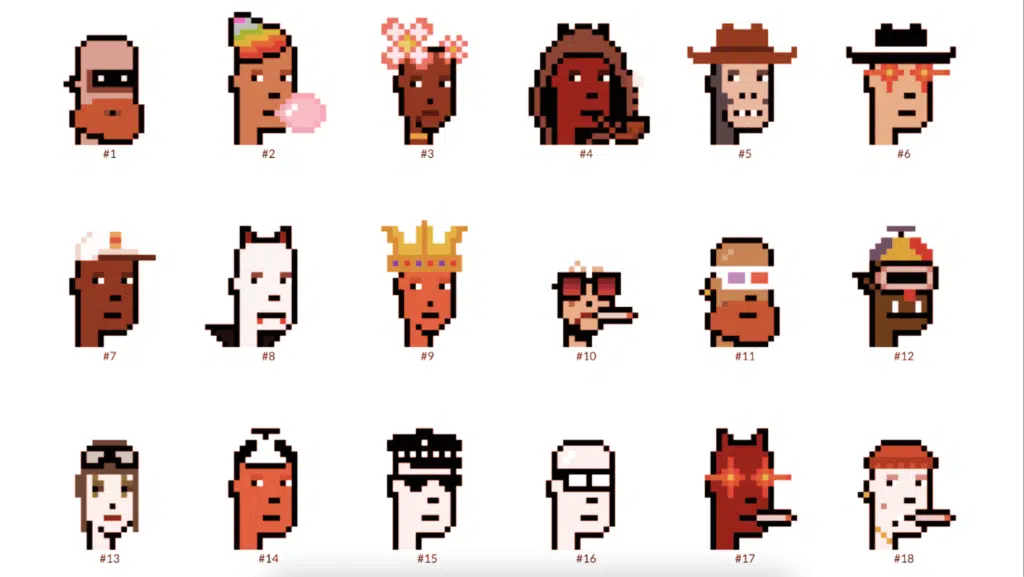
Latest Bitcoin Ordnial NFTs
Latest Bitcoin Ordnial NFTs | Source: Ordinals.com

Bitcoin Ordnals is an NFT protocol developed by Casey Rodarmor for the Bitcoin network, based on “ordinals theory.”

Bitcoin Ordinal NFTs are satoshis (the smallest unit of Bitcoin) “inscribed” with extra data. This could be text, images, and even whole interactive experiences. 

They can be traded just like regular bitcoins and hold the same base value. However, because of their uniqueness, they may also have some collectible value.

How Do Bitcoin Ordinal NFTs Work? 

blockquote icon

The smallest unit of Bitcoin is called a satoshi, and each Bitcoin is made up of 100,000,000 satoshis.

Bitcoin ordinals offer a way to track and attach information to individual satoshis (sats). 

Every sat ever made is given a unique identifying number that denotes when it was mined. The Ordinals protocol leverages the recent technical updates made to the Bitcoin network under the Taproot upgrade, to perform “inscriptions” of additional metadata on satoshis. Together, these two features — unique ordered (i.e., ordinal) numbering and inscribing of data — make truly native, full-featured NFTs possible on Bitcoin. 

Ordinal NFTs carry all the features normally associated with NFTs. They are: 

  • Immutable: Can not be changed or modified once created.
  • Ownable: They can be individually owned because each one is a separate entity.
  • Permissionless: They are fundamentally decentralized and are stored on the Bitcoin blockchain which is open, making their usage, transfer, and ownership, available to everyone. 
  • Self-contained: They hold all of their data and don’t rely on third-party applications for their existence, storage, or functionality.
  • Uncensorable: They can not be modified, destroyed, or removed from the Bitcoin blockchain.

Differences Between Bitcoin Ordinals And Traditional NFTs

Bitcoin Ordinal NFTs share similarities with traditional NFTs, but there are also many differences:

  • Minting: Ordinals on Bitcoin are created by directly inscribing data onto individual satoshis. This sets them apart from Ethereum NFTs and those from other networks that are minted by smart contracts.
  • Data Storage: Ordinal NFTs hold all of their data on-chain making them truly immutable, while traditional NFTs typically hold a link to data stored on a third-party service. For most, that is the InterPlanetary File System (IPFS).
  • Royalties: Traditional NFTs often include post-sale royalties which are paid to the creator upon every re-sale of the NFT as a percentage of the sale value. Ordinals don’t have such conventions in place and their creators are not compensated.
  • Interoperability: The interoperability of Ethereum NFTs is well established. They can be wrapped just like other tokens and traded across many different blockchains. Bitcoin NFTs are more siloed for the time being and their cross-chain interoperability is limited. 

Conclusion

Ordinals inherit the security, decentralization, and widespread adoption of the Bitcoin network — currently the most popular blockchain network in the world. 

Each individual satoshi, minted as an Ordinals NFT, can be tracked and used directly on Bitcoin, something considered impossible until 2023. To support Ordinals, specialized wallets and platforms have been created to make it simpler for users to create, view and trade them. 

Ordinals extend the functionality and use cases of the Bitcoin network and its namesake cryptocurrency, bringing it closer to the modern blockchain experience that users have come to expect from alternatives like Ethereum. 

Sam Farao
Written by

Sam is our pioneering figure in affiliate marketing and the blockchain space (prior to co-founding Coinweb.com). His ventures, including Netpixel Media and Captana, have set new benchmarks in the affiliate marketing industry, leading to a notable acquisition by Speqta AB for 31.5 million Norwegian kroner ($3.8 million USD).

Farao’s foray into blockchain technology is marked by the Lightbulb Man project, a blockchain-based art collection featuring NFTs, which sold out in one day! This highlights his role in merging the worlds of art and digital technology.

More crypto lingo